

INTERVIEW: Matt Johnson & Jay McCarrol on making Nirvanna the Band the Show the Movie Feel Like an 80s Movie
/Matt Johnson & Jay McCarrol of Nirvanna the Band the Show the Movie talk about making the show bigger for the big screen, the bit of deception that makes them happiest, and how everyone who helped make the film gets a chance to improvise.
Matt Johnson: You have an Egyptian Theater t-shirt on?
I do. We are actually just on our way out of Sundance, traveling through Utah right now.
MJ: Yeah, well the Egyptian Theater is where we shot the theater scene in episode four of-- no, episode five of Nirvanna the Band The Show, Season One.
Yeah, it's a nice little full circle moment or something.
I'm really appreciative of this movie because I think it was just some of the most fun I've had in the theater in a long time. I also was lucky to meet Ben Shane from your crew while I was out [at SXSW]. He's been on the podcast, too, so, I'm just appreciative of everything that you guys have done and really excited to actually talk to you more in detail about it.
MJ: Ben Shane just finished shooting his first feature.
I know, I'm super excited for him.
So I really love the show. Something that really excited me about the movie is that I think you were able to stay true to what is so great about the show, while making something that feels bigger and riskier. What were you both hoping to add by expanding Nirvanna to the big screen.
MJ: That's interesting. I don't know that the idea of adding something to it was on our mind. I know that Jay's big vision was that it at least have the scale of a movie, right? That it be big in the way that movies, especially in the ‘80s, were big. And oftentimes, I'll speak for myself, I'm normally pretty allergic to doing anything that breaks--
--In this movie, we break the laws of physics. Like, they literally travel through time. That's the kind of thing that in that TV show, I would always reserve for special episodes, like when we did that Halloween episode where Jay turns into a werewolf and all these magical things happen. Even like the bank robbery episode where things get heightened to a point of unbelievability, it always seems like it's somewhat pushing against the central philosophy of Nirvanna the Band, which is everything you're watching is real.
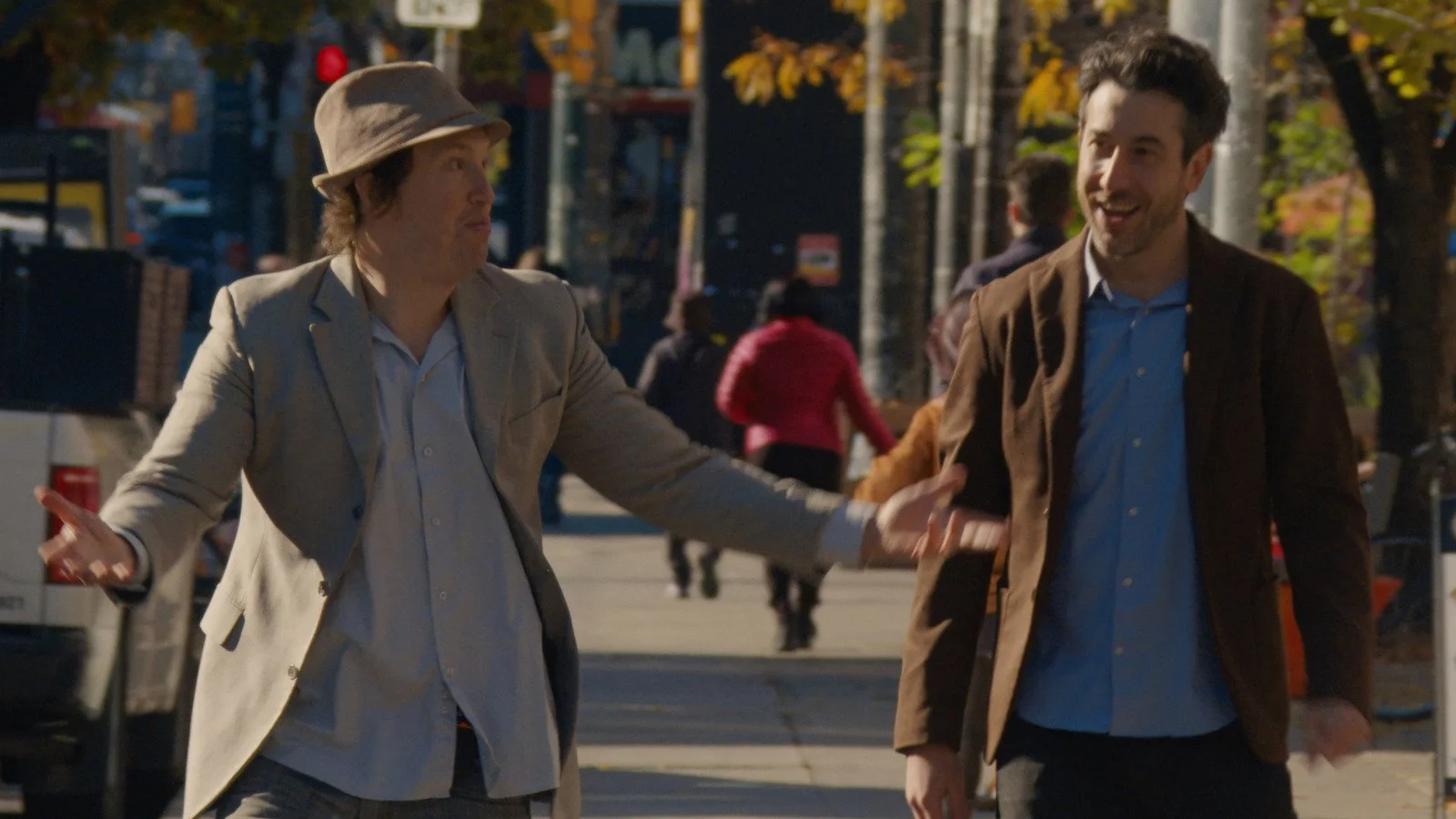
But it was a really brilliant intuition to make this movie about something impossible because they actually work in concert. The fact that it is a time travel movie, that the audience is constantly asking, wait, “is this real?” That there's something that I didn't realize was so fun about that.
So I don't think that we had any goals in terms of things that we wanted to bring to Nirvanna the Band other than this general idea of having the fact that this was called, “the movie,” earn itself. In terms of the right for it to play in a movie theater. Which is why that opening scene with the CN Towers is so big. It’s all shot so huge, and we're shooting car chases and murders and things like that. We're trying to crib as much as we can from event cinema as we remembered it from when we were kids.
Jay McCarrol: When we made the show it was a lot easier to, in a sort of series way, where we can just go from one episode to the other. You kind of live with these guys for a while, and you can really get a sense of what the show was invented on, which is like a revolving door. It's like Pinky and the Brain, you know, they try to take over the world, they fail, they start again from zero.
We could absolutely keep our boundaries of, “let's keep this grounded, and believable and real.” It does feel wrong for us ever to sort of go outside that. And it did feel like a special, like, Treehouse of Horror, coloring outside the lines when we did the bank robbery or the actual Treehouse of Horror Halloween thing.
What felt really freeing when we started to indulge the idea of a time travel plot, is that because it's a movie and we knew that we wanted to make a standalone movie that didn't feel like just a long episode of the show, going a little bit bigger and being able to play with some of the tropes of of sci-fi actually allows the writing to have something that feels like a big arc that kind of comes around on a big five act structure that feels satisfying.
Where our more grounded, first attempt at the movie was just a lot more complicated to make it feel like a well-rounded movie that started, built up, finished, and ended. Whether or not it was going to be this movie, it would be an episode of our TV show where we would allow ourselves to color outside the lines again and just do something crazy. We always wanted to include something with the CN Tower. That height of the CN Tower was just too intoxicating.
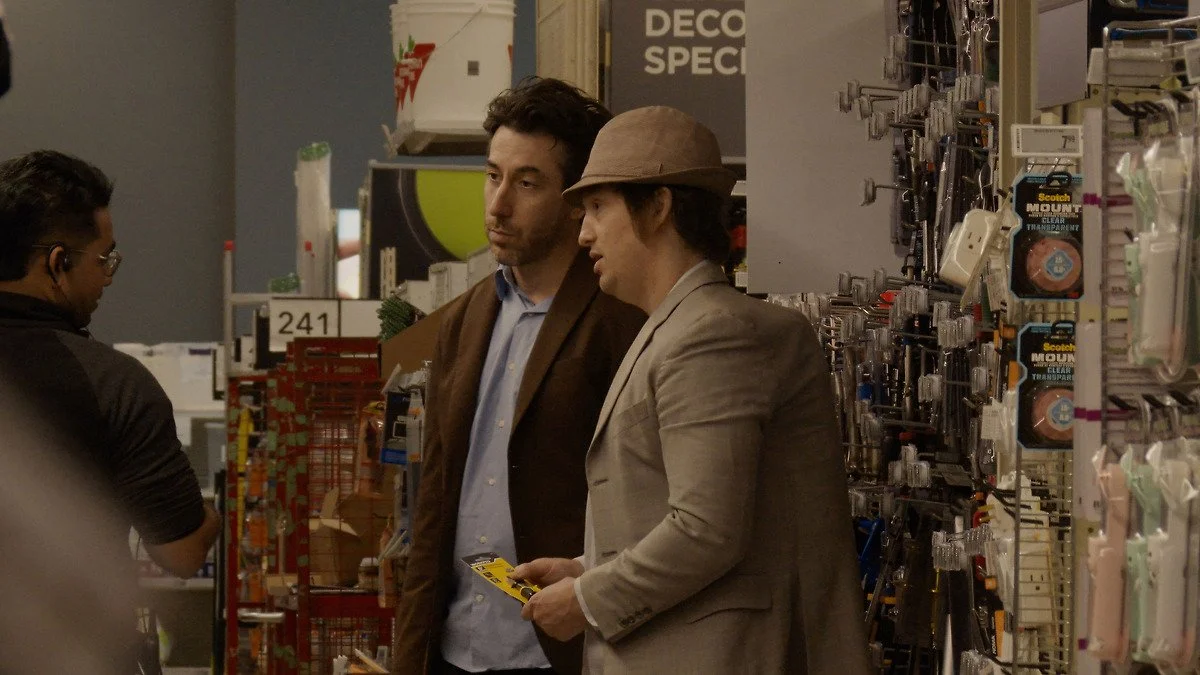
Also, our old footage of our web series had aged to this vintage quality where we realized, we had saved this footage for something. I mean, if not now, when we when we actually had the opportunity to make a movie [then when?] So we were just being, you know, somewhat opportunistic when we were at a certain point in the making of [the movie]. And I'm really glad that we did allow ourselves to do what… was a little bit outside the boundaries of how we normally make the show. To make it big and lift it. This is a classic movie that has all the bells and whistles of the nostalgia that we grew up on.
100%. It really does feel like that big event kind of moment that you want in a cinema. I'm not a filmmaker, but I know enough to watch something like this and see that there's some magic in the works in terms of how things are stitched together in ways that are obviously impossible but work on the big screen. In the making of [Nirvanna the Band the Show the Movie], is there any bit of deception that you're able to get away with in terms of the production that you were particularly proud to pull off or happy to see on screen?
MJ: The best thing for me was how we shot 2008 in Toronto. I never thought that was going to work. But I'm so hopelessly optimistic. I'm always like, “ah whatever, it'll be what it is.” And the way that both Kerry Noonan, our production designer, Jared, the cinematographer, and Kurt & Bobby, the editors, put that together, like when Jay & I are walking down Queen Street in 2008. I'm like, hell yeah, that's awesome. This is a great time travel movie.
I think those kind of invisible effects are really what makes this movie so fun. We weren't really doing anything that, you know, two film students couldn't do with their own camcorders. Now, obviously there's some sequences that are impossible to replicate without a great knowledge of visual effects. But for the most part, this movie is like, “how far can you push just shooting in the streets and making it seem like it's a sci-fi premise?”
Which, to me, was by far the most satisfying [part]. Because when you think of a premise like that - these characters bounce back and forth between 2005 and 2008 - it's like, well how on earth are we going to do that? And then the way that we did, it stuns me when I watch it.
The understated visual effects really do make things feel so real. But combined with how Jared shoots the film in that really loose run-and-gun style, dhow were you able to incorporate VFX in that way?
MJ: You basically just described the secret, which is that by having the camera shooting in a way that does not-- look, this is such a multi-dimensional conversation because sometimes Jared is shooting in such a way where he's trying to remove the need for VFX, because he's shooting so close or he's avoiding certain things, and other times he's shooting in a way where the action that's happening is so random and chaotic that he can't think, “I need to shoot this in a way that Tristan is later going to be able to composite something into.”
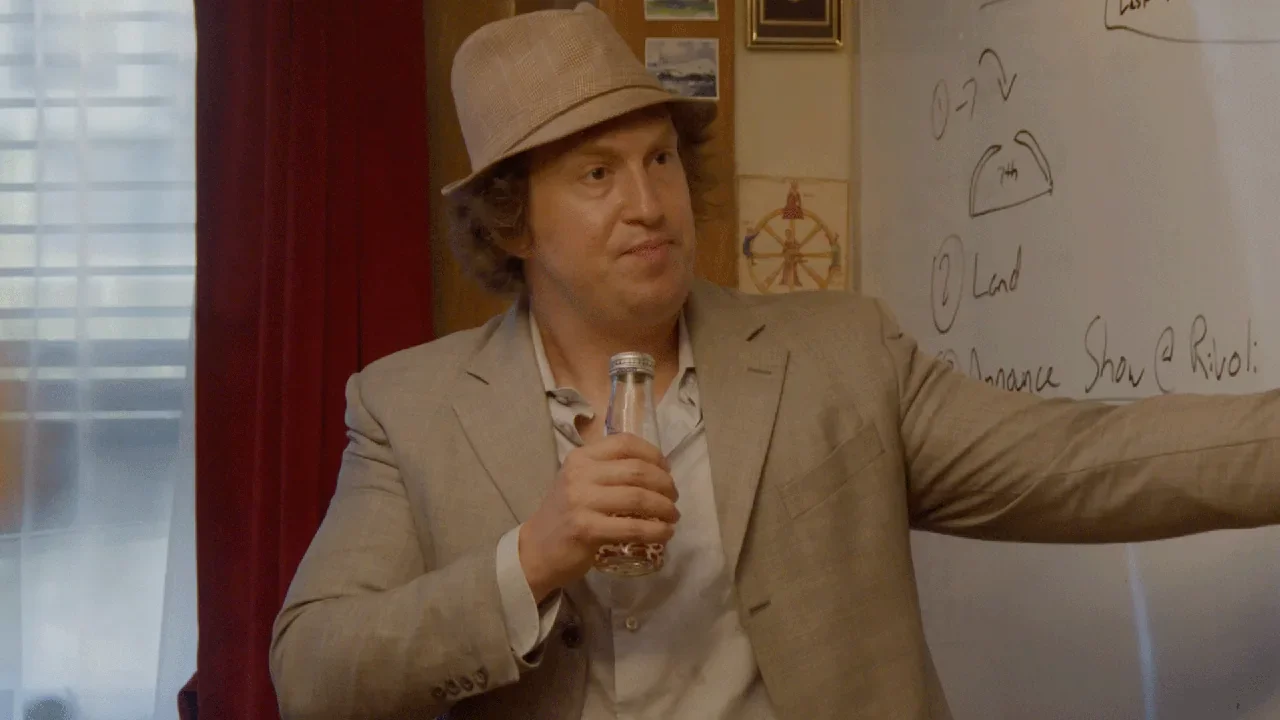
And so it's the collision of this random documentary footage with very, very, very sophisticated VFX treatments that makes it seem like what you're watching is not only actually happening, but surreal. I shouldn't answer for Jared because he would have his own… I think I hear Jared's voice. I think Jared is in the office. I'm not joking.
So maybe we could get an answer from him, but it's not as simple as we go to shoot something like, say, in the streets in 2008, and then we make a plan. We say, “Okay, we're got to walk right like this. And we got to make sure we stay on this exact line, like in that Bourne movie,” it's much more random.
JM: There might be a few little planned moments like that. But you did touch upon something that maybe a lot of people do know if they know how movies are made, but a lot of people would be very surprised how much VFX play into movies in subtle ways to lift them and to help things along [in ways] you would never know. We're so lucky that we've always been working with Tristan [Zerafa]. You would never know on the last movie, BlackBerry, how much VFX played such a huge role in making that movie valid.
MJ: No, cohesive. What we were talking about in the DVD commentary last night is that most of our VFX are stitching shots together so that they seem like they're an uninterrupted take. That's what we're we using VFX for more than anything. And that's going all the way back to The Dirties.
Tristan was stitching shots together on The Dirties in order to make it seem like a documentary because that's really the trick. You shoot something in the real world where crazy shit is happening. You can't plan for it, and then it's only afterwards that the editors are like, “Wouldn't it be great if this shot turned into this shot? And then it would seem like this was one continuous moment.”
Now, you can just make that happen.
JM: VFX for the purpose of making things seem without VFX.
MJ: Yes
JM: Instead of VFX for the purpose of like, oh, now this explosion has happened.
MJ: But doesn't this look cool? In fact, it's the opposite. We're using VFX to make the audience not even notice.
JM: Not even look. Don’t notice anything.
In listening to you guys talk about this movie, you both shout out your editors, Kurt and Robert, a lot. Can you talk a bit about their workflow and what makes it different from a typical film production?
MJ: Yes. This is another multifaceted answer, but they're actively involved in the writing. So unlike most editors, these guys are not just receiving footage and making decisions about it. That in fact almost never happens. Really, we are creating assets for them to then respond to. They’re our first audience.
I wouldn't even say they're our first audience. Jared is really the first audience. Jay and I are in some ways performing for him and Luka and Nikolai to try to kind of get a reaction from them.
And that's the first level. Then Kurt and Bobby are watching and being like, okay, we like this and we like this, but they're not sorting dailies together and then making selects from the dailies.
Really, they each sort of split up the movie and tackle scenes one at a time. Then they share those scenes with one another, and then they'll send me something and be like, “this is what we have for this.” And typically that's a painful moment because I'm like, “Well, we did get this,” or, “this is a disaster,” or, “I need to shoot this.”
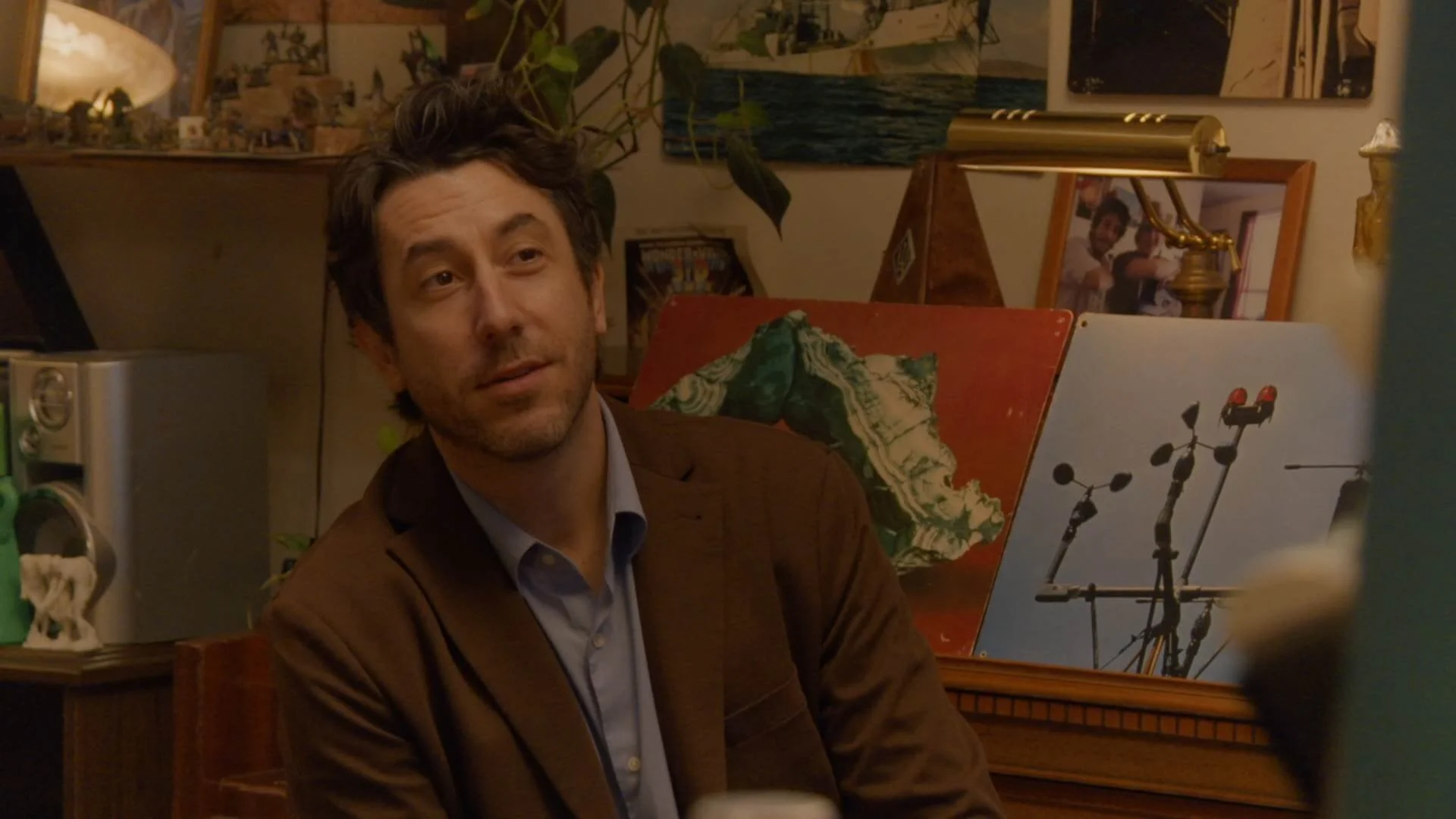
JM: Without a script, Matt and I are improvising and trying to write on the spot. And Jared is also involved in shouting out how he's hearing things coming together. What it ends up feeling like you're doing is you're pitching possibilities of what this script is.
MJ: Specifically the dialog and the jokes. Then when we look at what they've put together, oftentimes that will then change what we shoot the next day or the next week or the next month. So it's a very back and forth process where it's almost like we're building an organism together, where no one person has a concept of the finished thing in their mind. It's more like mad science as opposed to a single writer being like, “This is exactly how I see it.”
Which is very gratifying because it means they have so much more control over the writing.
JM: They’re writing. They’re writing with us.
MJ: But even more than that, they're writing, but they're also producing. They're also making demands on how Jay and I will then go shoot things. The entire 2008 sequence, they told us what we needed to say. They were like, “you need to say this, you need to do this,” like it was very, very specific.
It's really a question that they should answer in terms of how gratifying they find it. Maybe it's awful and they hate every minute of it, but it is certainly above and beyond what an editor is normally doing, because there'd be no other way to make something like this.
It sounds like everybody gets to improvise a little and play together, and you have this big sort of team, family feel to it.
MJ: They're improvising too, because oftentimes they're taking footage and recombining it in ways that we never intended. They're also taking things that we didn't even mean to shoot. Almost every black and white flashback in the movie where you see a recontextualized emotional moment for either Matt or Jay, were never meant to be black and white flashbacks.
That's just Curt and Bobby being like, oh, I like how crazy the performance got here, but I can't include it in the movie because they're breaking character. But if I put it in slow motion and play it in black and white, then all of a sudden it actually does represent the inner monologue of these characters. And it's not like we're planning that stuff. They're coming up with that on their own.
JM: It's really satisfying. It's a very small group that does this. Matt is the director and always is at the end of the day, the director, but what he allows for, when we figure this out, what's always been the case since we were kids, is the small people that put this together--
MJ: --All people.
JM: The small people, the small amount of people. Our little team that gets to share wearing the director's hat at any given time to try and contribute to the filmmaking. We all have this kind of like a jam band mentality of just whatever good idea is working, we hear each other. Good ideas do get heard. That's why I feel so protected when I'm improvising with everybody, because I know that the good stuff is going to be used and the bad stuff is going to be cut. There's no real script that we're screwing up or abiding by.
Speaking of mining from some of the old footage, Jay, you also have to mine from an old melody to to turn, Jay in the film into a pop star. Could you talk a little bit about, like, expanding on that musically?
JM: There's really not that crazy story to that, we knew that we were going to have Jay in an alternate universe become a famous pop star. And I think right on the heels of that storyline development, we're just like, oh, “it'll he'll be famous on Never Come Down. That song will just have it just fueled his entire career and he's still getting buy off of that.”
It's funny, it's pathetic. It's great. You know, like, whatever. We were just laughing our way through it and nobody had a better idea.
MJ: I don't think there could have been a better idea. It was one of the miracles that made the movie work.
JM: We already had it. I didn't need to, like, write a new pop song. It just felt in the spiritual vein of the way we make this stuff to just sort of be opportunistic and to take this existing song. At the time when I wrote that years ago, it was just written to sound like a famous pop song that was sort of the behind the curtain effort there. It was meant for a commercial jingle, a Bell underwater phone. It did go on that commercial.
And then I started a band, based on that song with my sister. So it was just a fun time. It was a real Trojan horse to just kind of get in there and write music and get on the radio for a bit. But the song is now living on in so many different ways.
MJ: And it's a one of the great tricks of the movie where you hear it, you're like, “Oh, this song is actually kind of catchy.” Like for people who don't know where it's from. Yeah, it's special.
JM: I find it to be such a ridiculous song. And I love it. I'm not trying to be self-deprecating on it, but I think it's so funny. And that's why it works so well for the Jay character. Because it just sounds so funnily obvious in a weird way.
Given that this film has sort of been in the can for a bit, and you're both very creative people, I'm assuming you're both thinking about what your next projects are in the midst of working on them. You don't necessarily have to talk about what they are. But I am curious what kind of questions you ask yourself as a creative in the process, in terms of what you're trying to do and trying to achieve with what you're working on next?
MJ: Oh, I don't even think about things like that. Being a filmmaker in Canada is such a scrappy existence that basically any time you get a chance to make a movie, you just sort of do it. I don't really think about, oh, “with this movie I will do X at all.”
JM: It's sort of, “I have an opportunity to work on what? That would require what? Can I do that? I think I can get excited about that. I will make an effort to get excited about this. Now I am excited. I've dug some layers deep and we're getting into it.” Like when we were not working on the TV show for a year or two after Viceland went down, there was a time where there were a lot of things floating around that we're trying to just get some project off the ground.
When Matt called me and said, we're going to make BlackBerry, I'm like, “About what? The BlackBerry phone?” I couldn't believe that that was the project that actually had the legs to go and was being greenlit through all of these different corridors to become a reality. We would have never guessed that that would have been the subject matter that our team could tackle.
It took not long to completely absorb the entire story and the wholeness of that. And it was very exciting. You just have to be opportunistic and take what you get.
MJ: I think without trying any movie a filmmaker– well, I shouldn't say any because there's all kinds of people who are making movies.
I'm going to bring myself to whatever it is I'm doing. So it's not like I need to consciously think about that. In a very real way. If something’s captured my interest, then it must in some way speak to a part of my soul. So long as I'm able to maintain honesty with myself.
Taking whatever opportunities they allow you to get away with, I guess.
MJ: That's a part of it too. That inherent naughtiness around the idea of me even being able to make a movie with any type of professional system that seems as though I've broken into a building and I'm in disguise.


