

TIFF's Must-Watch Docs 2026
/
The Toronto International Film Festival’s 2026 documentary lineup celebrates the power of non-fiction storytelling, bringing together 21 films from 20 countries, including 18 World Premieres. These are our Must-Watch TIFF DOCs for you to keep an eye on.
RESCUE
RESCUE
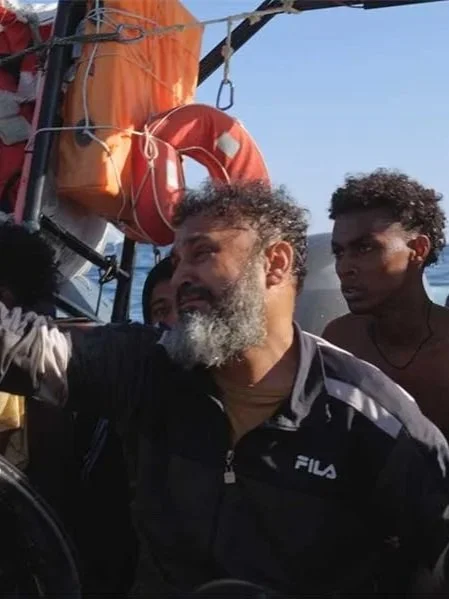
On a dead-calm morning in the Mediterranean, the migrant rescue ship of Doctors Without Borders spots a deflating rubber boat. Dozens of people are struggling in the water. Among the refugees is Roro, a Yemeni mother traveling with her husband, Hani, their two-month-old baby, and two young sons. As the rescue begins, a Libyan militia intervenes and abducts Roro and the children, dragging them back to Libya. Meanwhile, Hani is rescued and arrives in Europe alone. A family is violently torn apart across the Mediterranean. While Hani fights from Europe to reunite the family, Roro struggles to survive captivity in Libya and to protect her children.
DIRECTOR: SINE PLAMBECH
WORLD PREMIERE | 90m | TIFF DOCS
“The suffering at sea is not simply chaos or circumstance, but is the consequence of systems and choices made far from the waters where they are felt.”
Rescue follows Doctors Without Borders ships as they attempt to save migrants stranded at sea, but director Sine Plambech gives the humanitarian crisis a deeply personal face through one Yemeni family torn apart during the journey. Hani, the father, is separated from his wife, Roro, and their children, who are abducted and held in a detention camp. His desperate effort to reunite his family becomes the emotional center of a film that reveals how borders and violence can systematically keep families apart.
An anthropologist and filmmaker who has spent years documenting migration, Plambech brings an intimate, firsthand perspective to the story. On-the-ground interviews are interwoven with hidden phone footage, giving the film an immediacy that makes the dangers of the journey impossible to look away from. The result is a documentary that moves beyond images of migrants as statistics, instead capturing the fear and determination of people caught in a system they cannot control.
That said, Rescue is also an indictment of the political machinery surrounding migration. As Hani searches for his family, the film exposes how policies, funding and border practices can enable conditions in which human beings are detained, exploited and separated from those they love. Its most powerful insight is that suffering at sea is not simply the result of chaos or circumstance, but is connected to systems and choices made far from the waters where their consequences are felt.
THE ULTRA RUNNER

THE ULTRA RUNNER
Driven by a violent past and hardened by years of crime and incarceration, Romanian ultramarathoner Tibi Useriu battles endless terrain and his own demons in search of a better life for his family, his country, and himself.
DIRECTOR: MILA AUNG-THWIN
WORLD PREMIERE | 98m | TIFF DOCS
“A film about forging your own path, both mentally and physically.”
After spending nearly a decade in a high-security prison, Romanian ultramarathoner Tiberiu “Tibi” Ușeriu found an unlikely path forward: running. The Ultra Runner, from Canadian filmmaker Mila Aung-Thwin, follows Ușeriu as he pushes his body through some of the world’s most punishing races, including the 6633 Arctic Ultra, a 380-mile endurance test across the frozen Canadian North.
As Ușeriu battles the exhaustion of dashing through the snow, the film looks back at the experiences that shaped him. Through dramatic recreations, it traces a childhood under Romania’s repressive regime, years spent among criminals and an upbringing marked by abuse. These memories provide a powerful counterpoint to his endurance racing, revealing how running became more than a physical challenge, it became a way of confronting his past and rebuilding his life.
The Ultra Runner ultimately becomes a story about racing against more than the clock or the elements. Ușeriu pushes himself mentally and physically, using endurance as a means of creating his own path forward. The further he runs, the more the film suggests that his greatest challenge is not crossing the finish line, but continuing to move beyond the person he once was.
RAPINOE

RAPINOE
Soccer star Megan Rapinoe explores what it means to win and lose in this intimate portrait.
DIRECTOR: REBECA HUNTT
WORLD PREMIERE | 92m | TIFF DOCS
“Beyond the goals and glory, Rapinoe is a portrait of an athlete redefining herself after the game.”
Rapinoe opened TIFF’s 2026 documentary program with an intimate look at soccer star Megan Rapinoe as she reflects on her life and career in the transition to retirement. The film revisits her achievements, including two World Cup championships and an Olympic gold medal, while also exploring the activism that made her one of the sport’s most recognizable voices.
Beyond the trophies and accolades, the documentary examines the challenges of balancing elite sports with a sense of purpose and identity, particularly under the glare of constant public scrutiny. Interviews with Sue Bird, Colin Kaepernick, Alex Morgan and others expand the portrait, offering perspectives on Rapinoe both as an athlete and as someone who has consistently used her public platform to speak openly about the issues she cares about.
Rapinoe is less a conventional sports biography than a portrait of a woman navigating what comes after a defining career. Unafraid to examine both the rewards and pressures of life in the public eye, the film captures Rapinoe at a moment of transition, looking back at what she accomplished while considering what comes next.
TEHRAN, UNDER THE SKIN
TEHRAN, UNDER THE SKIN
Téhéran à vif
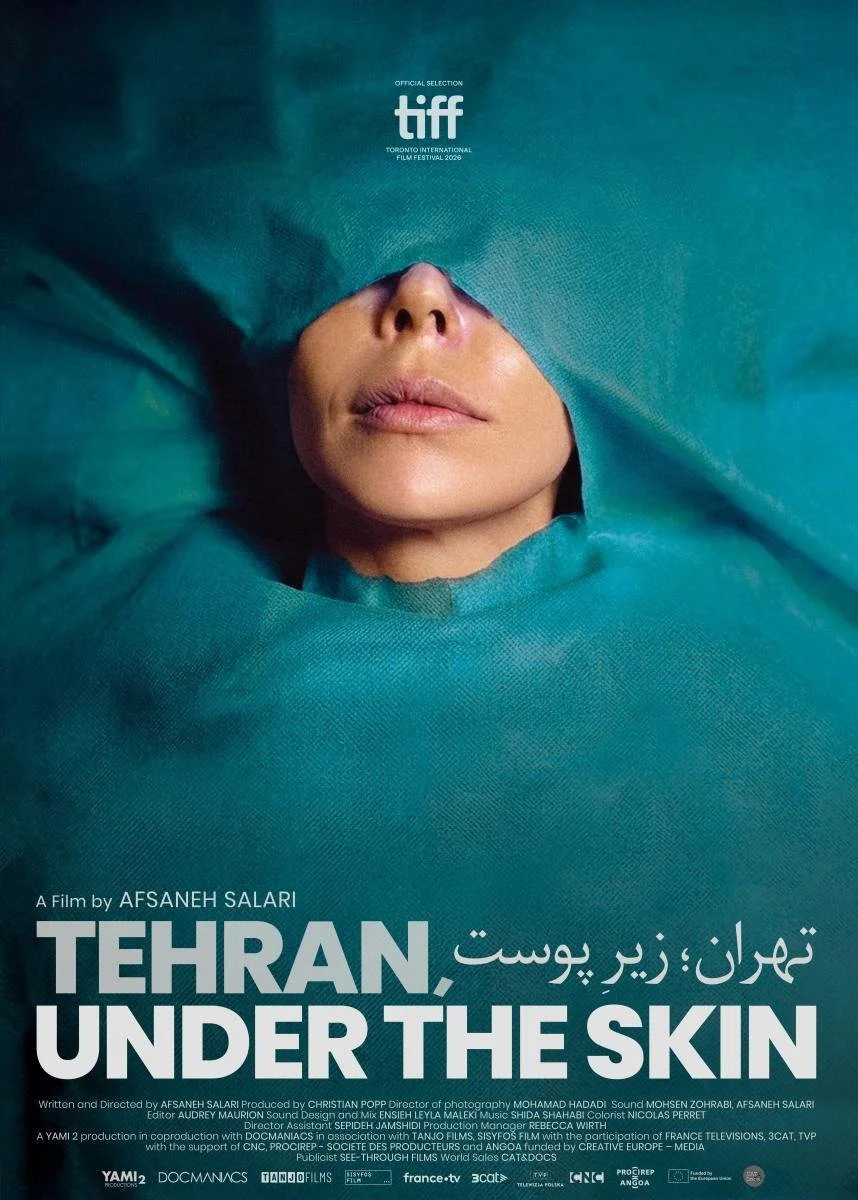
In an age of body anxiety, filmmaker Afsaneh Salari embeds herself in the offices of Iranian plastic surgeons to interview their clients with humour and empathy.
DIRECTOR: AFSANEH SALARI
WORLD PREMIERE | 84m | TIFF DOCS
“The real anxieties lie not simply in how people look, but in who gets to decide how they should live.”
Tehran, Under the Skin uses Iran’s cosmetic-surgery boom as a window into contemporary life, offering an unfiltered look at rhinoplasty, facelifts and other surgeries to explore how beauty standards and body anxieties intersect with identity and autonomy. Candid and observant, the documentary examines the growing influence of global ideals while questioning how much of the desire to transform oneself is a personal choice and how much is shaped by society.
The film’s focus on cosmetic surgery becomes a metaphor for Tehran itself: a city continually reshaped, rebuilt and chiseled by forces both personal and political. Beneath the surface, Salari reveals the tensions between individual desires and the social controls that shape them, suggesting that the real anxieties lie not simply in how people look, but in who gets to decide how they should live.
RE/PAIR
RE/PAIR
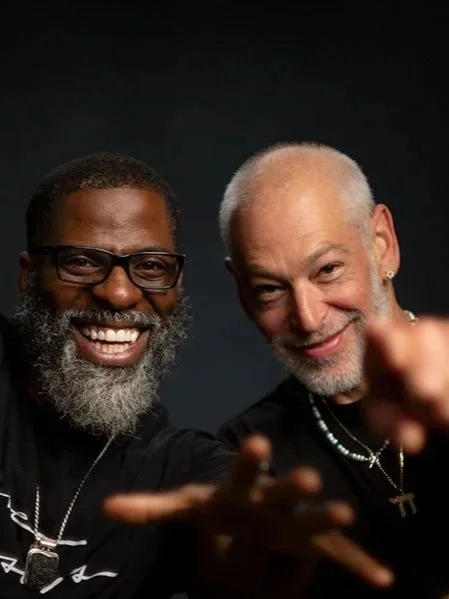
Prominent Black and Jewish figures engage in conversations about rifts in their historic alliance, partly centered on but not limited to current events in the Middle East.
DIRECTOR: LACEY SCHWARTZ DELGADO
WORLD PREMIERE | 101m | TIFF DOCS
“RE/PAIR asks a simple question: what happens when people choose to sit and listen?”
Directed by Lacey Schwartz Delgado, who is both Black and Jewish, brings together Black and Jewish Americans in a series of intimate, often unguarded conversations about identity, history, and the tensions that have complicated the relationship between their communities. The film’s 19 pairings bring together longtime collaborators as well as people meeting for the first time, including figures such as W. Kamau Bell, Van Jones, David Schwimmer, Matisyahu, Rhymefest and Harry Lennix.
Its ambition is to create space for honest and uncomfortable perspectives that are not meant to cause division but recognition. It doesn’t ask us to ignore the cracks between communities; instead, it suggests that acknowledging them openly may be the first step toward repairing what has been fractured.
RUN TERRY RUN
RUN TERRY RUN
See the legend like never before.
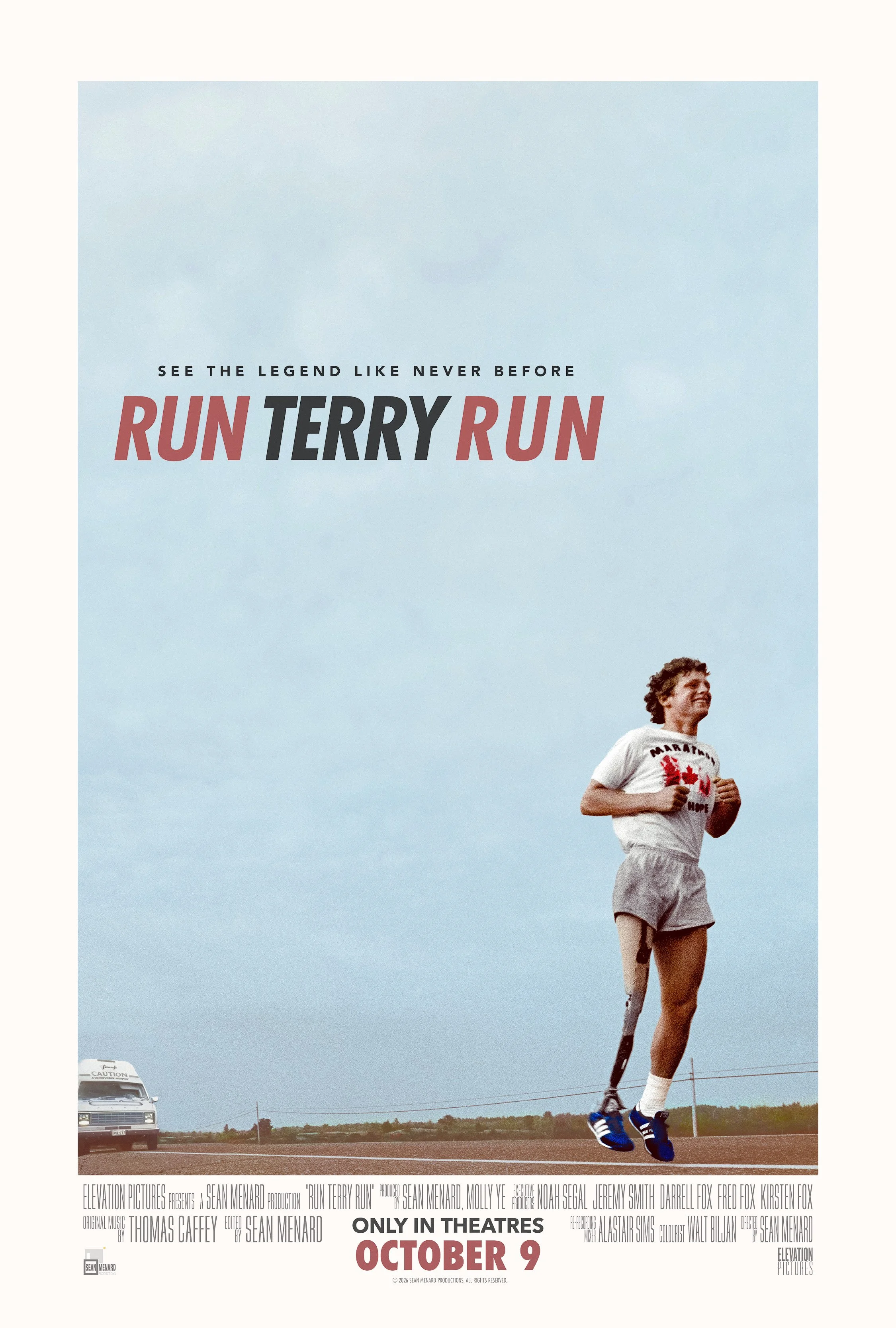
The extraordinary story of Canadian icon Terry Fox will be told like never before in Run Terry Run, a new feature-length documentary directed by acclaimed filmmaker Sean Menard. The film offers an intimate, behind-the-scenes look at Terry’s legendary 1980 Marathon of Hope, drawing from 96 reels of never-before-seen footage and unheard audio interviews that have remained untouched for 45 years.
DIRECTOR: SEAN MENARD
WORLD PREMIERE | 108m | GALA PRESENTATIONS
“Seeing the human underneath makes the legend even stronger.”
Terry Fox, the young Canadian athlete who lost a leg to cancer and then set out to run across the country to raise money for cancer research, has become one of Canada’s most enduring symbols of courage and hope. In Run Terry Run, filmmaker Sean Menard revisits Fox’s 1980 Marathon of Hope through 96 reels of previously unseen footage, along with audio interviews and firsthand accounts from people who witnessed his journey. Rather than presenting Fox simply as a heroic figure, Menard places viewers inside the experience, following Fox from his support van and documenting the physical and emotional demands of his extraordinary run.
One of the film’s most compelling elements is its attention to the reality behind the Marathon of Hope. Fox’s prosthetic leg was not designed to withstand the enormous endurance demands of running across the country, making every step a physical struggle. At the same time, he faced increasing pressure from the media and the growing expectations surrounding his fundraising campaign. The film shows that raising money and becoming a national symbol came with costs of their own.
Menard also explores the way Fox’s story has grown into a kind of Canadian mythology. Testimonies from people who believe they saw Fox along his route (even when evidence suggests they did not), demonstrate how quickly his journey became larger than the man himself. These moments reveal how memory can transform a real person into a national legend.
Run Terry Run is most powerful when it brings Terry Fox back down to earth. By showing the pain, pressure and determination behind his famous journey, the documentary reminds us that his legacy was not created by a single extraordinary moment, but by taking one difficult step after another. In doing so, the film presents Terry Fox not simply as an icon, but as a human being whose determination continues to inspire generations.
THE PERVERT’S GUIDE TO UTOPIAS

THE PERVERT’S GUIDE TO UTOPIAS
Philosopher Slavoj Žižek is our guide through landscapes of classic film, music, social media, archive and webcasts. Making unexpected twists and turns, he maps the utopian illusions of our times. Through absurd juxtapositions and startling insights, we are seduced into recognising our fate, in order to change it.
DIRECTOR: SOPHIE FIENNES
NORTH AMERICAN PREMIERE | 133m | TIFF DOCS
“Exposes the dark contradictions beneath our dreams of a better world.”
The latest collaboration between filmmaker Sophie Fiennes and philosopher Slavoj Žižek, following The Pervert’s Guide to Cinema (2006) and The Pervert’s Guide to Ideology (2012), is a freewheeling stream of consciousness about one of humanity’s most persistent fantasies: utopia.
Rather than offering a straightforward history of the idea, The Pervert’s Guide to Utopias takes viewers on a cinematic journey through movies, social media, archival footage and popular culture. Fiennes once again places Žižek directly inside the films he discusses, creating a strange and often playful collision between philosopher and fiction. He moves through works such as Apocalypse Now and V for Vendetta, as well as popular television series including The Handmaid’s Tale, using these cultural artifacts to investigate the fantasies and illusions behind our ideas of a perfect world.
His approach is deliberately messy. He jumps from one idea to another, following paradoxes, pessimistic thoughts and contradictions rather than presenting a neat philosophical argument. At times, it feels like a cinematic “How to Understand Utopia for Dummies”, except the guide keeps questioning whether the destination we are looking for should exist at all.
That is ultimately what makes the film so provocative. Žižek isn't offering a blueprint for the perfect society. In fact, he is deeply suspicious of blueprints themselves. Instead, he asks what our fantasies of utopia reveal about us: what we desire, what we fear and what the movies and media we consume tell us about our hidden ideals.
The film's central idea is perhaps best captured in his observation: “If aliens arrived, I would show them movies so they can see who we are.” That line becomes a kind of mission statement for the film. By examining the worlds we create on screen, he is really examining the world we inhabit.
The Pervert’s Guide to Utopias can be exhausting, provocative and occasionally bewildering, but that may be precisely the point. It doesn't give us an answer to what utopia should look like. Instead, it asks us to look more closely at the fantasies we already carry with us.


